1. Understanding the Magnesium Gap & Chronic Stress
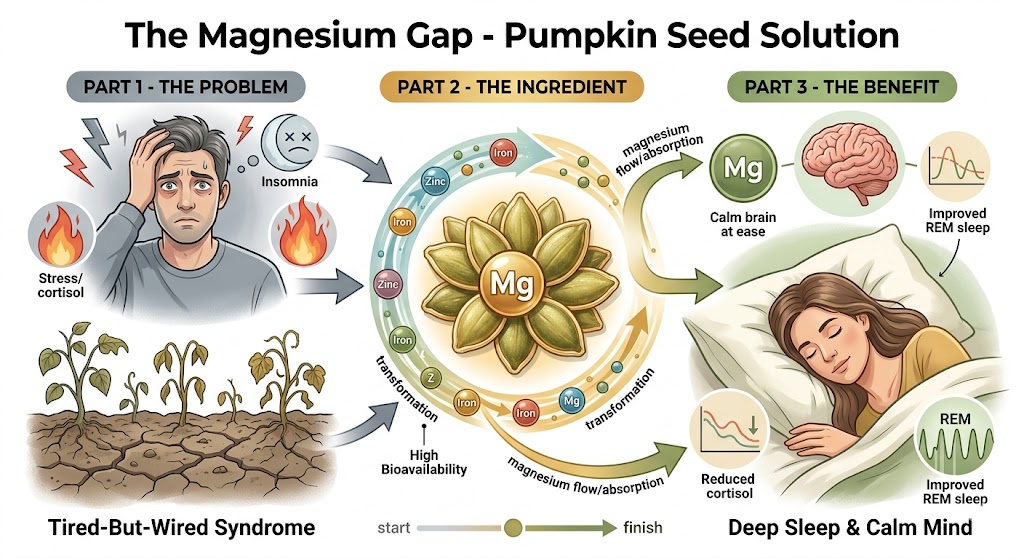
In modern nutrition, magnesium deficiency is often referred to as an "invisible epidemic." Due to intensive farming practices that deplete soil quality, modern fruits and vegetables contain significantly fewer minerals than they did fifty years ago.
When you combine mineral-depleted diets with high-stress lifestyles, your body burns through its magnesium reserves at an accelerated rate.
The Cortisol Loop
When you experience psychological or physical stress, your body releases cortisol and adrenaline.
- Magnesium is required to clear these stress hormones from your system.
- If you lack magnesium, cortisol levels remain elevated.
- Elevated cortisol causes anxiety, racing thoughts, and systemic inflammation.
To break this loop, you must replenish your cellular magnesium levels through functional, whole foods.
2. The Deep Dive: How Pumpkin Seeds Chill Out Your Nervous System
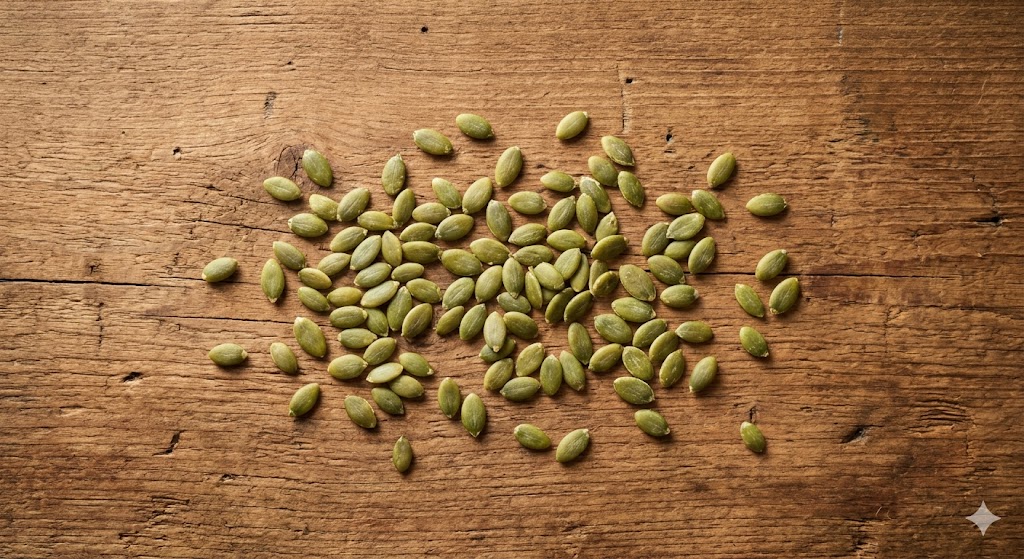
Pumpkin seeds (Cucurbita pepo), commonly known as pepitas, are the anatomical heart of the pumpkin. Don't confuse them with the tough, white outer shells you find in Halloween pumpkins; pepitas are the smooth, green seeds found inside specific oilseed pumpkin varieties.
The GABA Activation
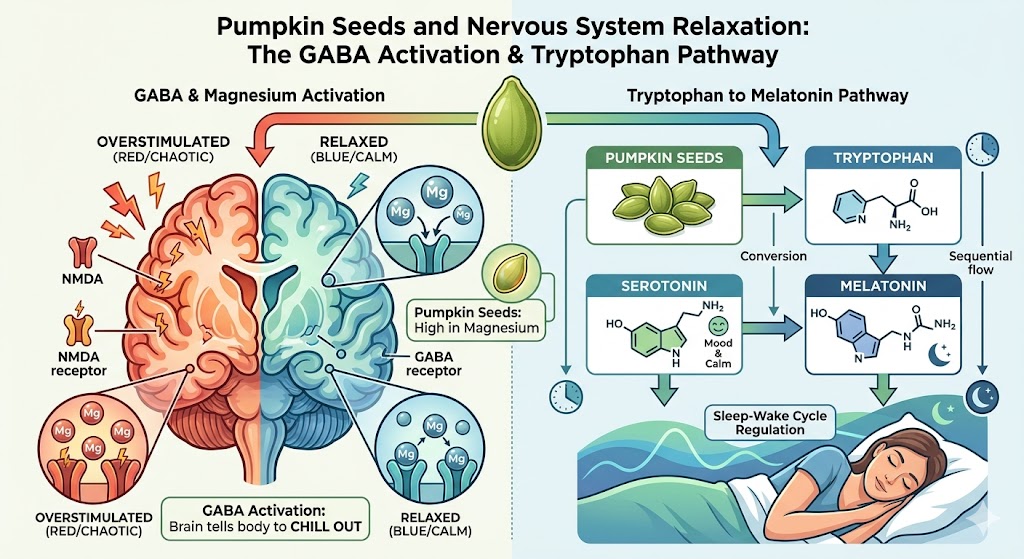
Magnesium acts as a natural gatekeeper for your nervous system.
- The Science: Magnesium binds to and activates GABA (gamma-aminobutyric acid) receptors in the brain. GABA is an inhibitory neurotransmitter, meaning its primary job is to slow down nerve activity and tell your brain to "chill out."
- When magnesium levels are low, your NMDA receptors (which stimulate the brain) run wild, causing that characteristic feeling of overstimulation and anxiety.
The Tryptophan-to-Melatonin Pathway
Beyond magnesium, pumpkin seeds are highly rich in an essential amino acid called tryptophan.
The Science: Your body cannot produce tryptophan on its own; it must come from diet. Once consumed, your brain converts tryptophan into serotonin (the mood-stabilizing neurotransmitter) and then synthesizes it into melatonin (the hormone responsible for regulating your sleep-wake cycles).
3. Evidence-Based Health Benefits
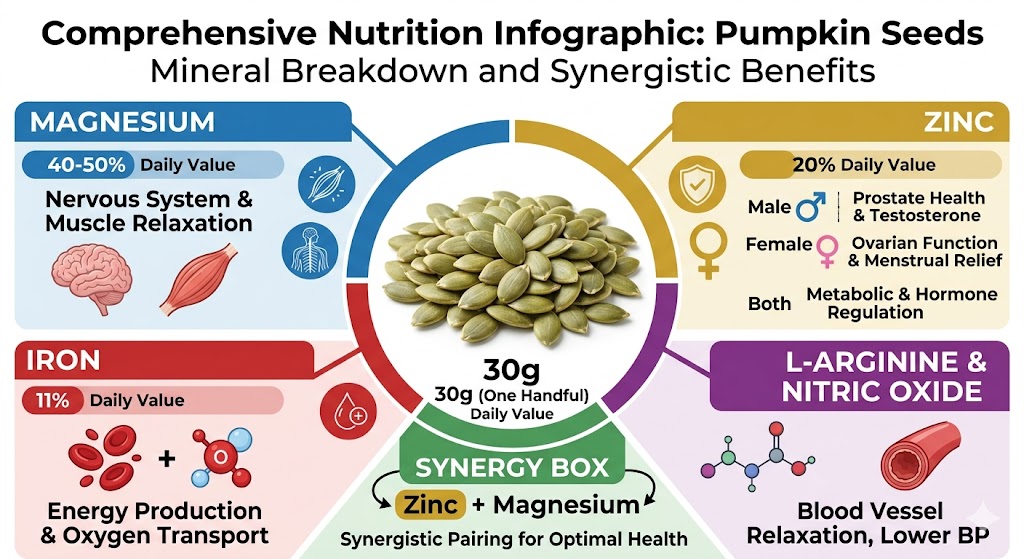
The Mineral Breakdown (Per 30g Serving)
| Nutrient | Daily Value (DV) % | Primary Target |
|---|---|---|
| Magnesium | ~40% - 50% | Nervous System & Muscle Relaxation |
| Zinc | ~20% | Immune Function & Testosterone Support |
| Iron | ~11% | Energy Production & Oxygen Transport |
High Zinc-to-Magnesium Ratio
The pairing of zinc and magnesium in pumpkin seeds is highly synergistic. Zinc is crucial for metabolic function and hormone regulation. For male readers, zinc supports prostate health and testosterone production; for female readers, it aids in ovarian function and reduces menstrual cramping.
Rich in Nitric Oxide Precursors
Pumpkin seeds contain high amounts of L-arginine, an amino acid that helps your body produce nitric oxide. Nitric oxide relaxes your blood vessels, improving circulation and lowering resting blood pressure, which physically counteracts the tight, tense feelings caused by anxiety.
4. Practical Dosing, Timing, and Preparation
To maximize the sleep and anti-anxiety benefits of pumpkin seeds, strategic timing is essential.
The Timing Rule: The Evening Ritual
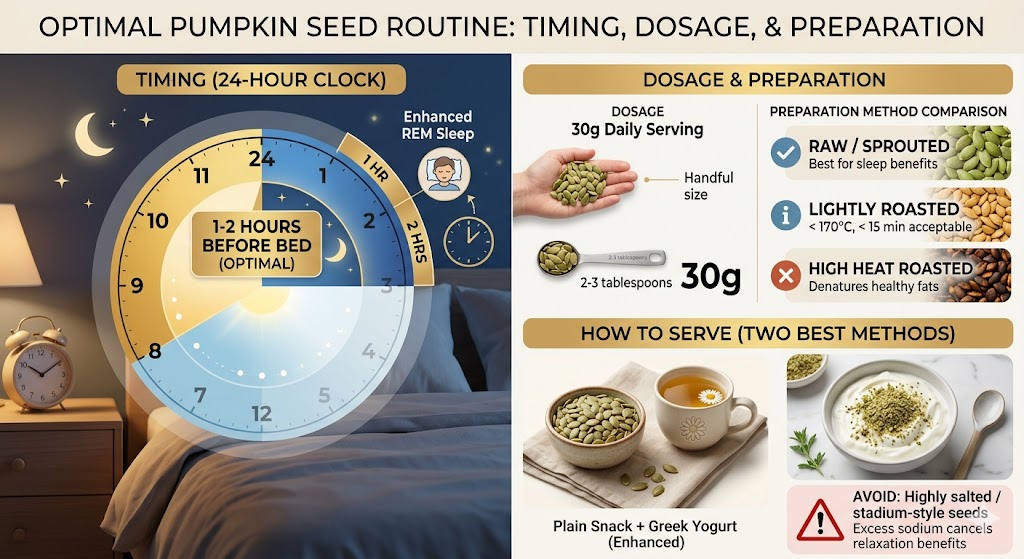
Because pumpkin seeds actively promote muscle relaxation and melatonin synthesis, the absolute best time to consume them is 1 to 2 hours before bed.
- Dosage: Consume 30 grams (roughly one small handful or 2-3 tablespoons) daily.
- The Preparation Rule: Raw or sprouted is superior. High heat can denature the delicate, health-promoting polyunsaturated fatty acids found in the seeds. If you prefer them roasted for flavor, keep the oven temperature below 170°C (340°F) and roast for no longer than 15 minutes.
How to Serve
- Eat them plain as a functional evening snack alongside a cup of chamomile tea.
- Grind them coarsely and sprinkle them over a small bowl of Greek yogurt before bed (the protein in yogurt paired with the tryptophan in the seeds enhances sleep quality).
Dietitian's Pro-Tip: Avoid purchasing "highly salted" or commercial "stadium style" pumpkin seeds. The excessive sodium levels can cause nighttime water retention and elevated blood pressure, completely canceling out the relaxing benefits of the magnesium.
5. Potential Risks, Considerations, and Side Effects
Pumpkin seeds are universally well-tolerated, but keep these practical considerations in mind:
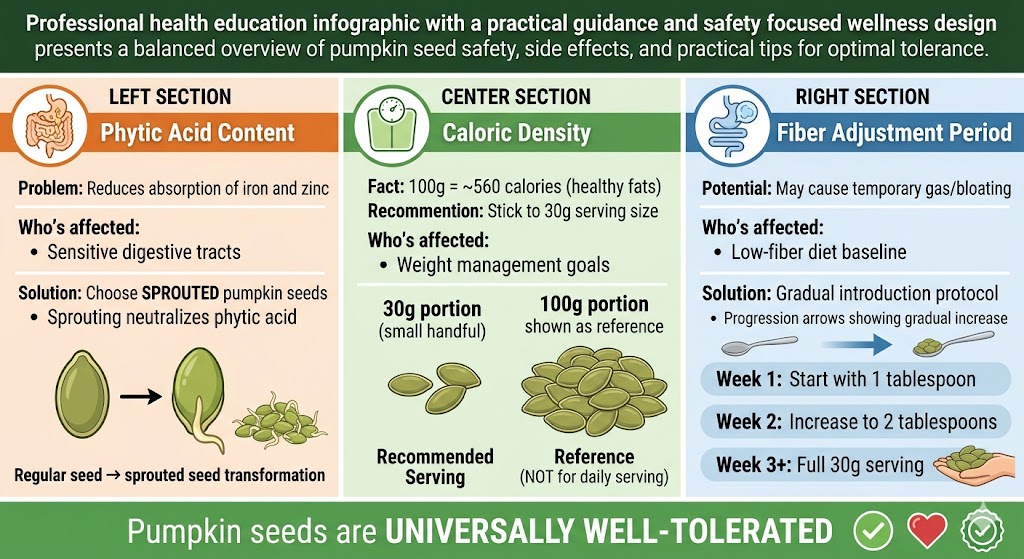
- Phytic Acid Content: Like most raw seeds, pumpkin seeds contain phytic acid (phytates), which can slightly reduce the absorption of iron and zinc. If you have a sensitive digestive tract, look for "sprouted" pumpkin seeds, as the sprouting process neutralizes phytic acid.
- Caloric Density: Because they are rich in healthy fats, a 100g portion contains roughly 560 calories. Stick to the recommended 30g serving size if weight management is part of your goals.
- Fiber Adjustment: If your current diet is low in fiber, adding seeds suddenly can cause temporary gas or bloating. Start with 1 tablespoon and work your way up over a week.